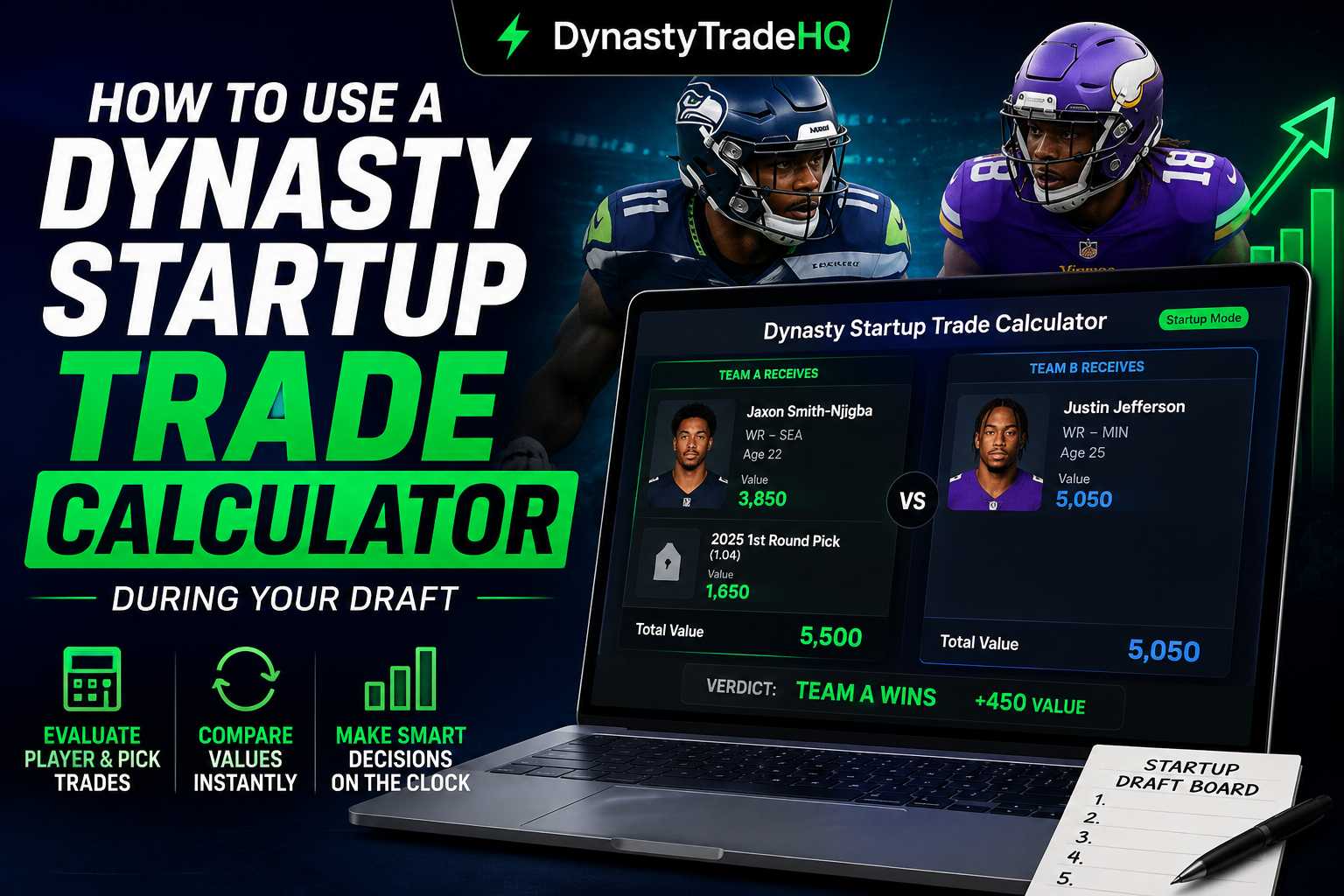
A startup draft is not a normal trade environment, and using the wrong valuation framework will cost you. A dynasty startup trade calculator applies a different value system than the one used for in-season trades, one built around draft context, pick currency, and roster construction from scratch. This guide breaks down how to use that tool effectively so every trade you make on the clock is backed by real numbers, not instinct. Before your draft opens, pull up the trade calculator and make sure you are in startup mode, not standard trade mode. These two settings produce different outputs for good reason.
Table of Contents
What Makes Startup Trade Value Different From Standard Value
Startup trade value is a different calculation than the value you use during a normal season. In a standard trade, you are comparing against a baseline of existing rosters, known league tendencies, and recent performance. In a startup, every team is being built simultaneously and no one has context yet on how aggressive or conservative the room is. This shifts value in concrete ways. Veteran players with two or three strong seasons remaining trade closer to their ceiling in startups because buyers do not yet have established depth to protect them.
Young players with unclear roles carry more risk in startup settings because no one is targeting need, they are drafting speculation on top of speculation. Pick values also behave differently. A first-round pick in a startup draft has a defined, immediate value because the rookie class is known. That same pick in a mid-season trade is partly an abstract asset. During a startup, the calculator anchors pick values to actual draft position probability and current class strength, which gives you a far more precise number to negotiate from.
The core rule: do not use a standard trade calculator to evaluate a startup swap. The values will mislead you. A tool that accounts for startup context specifically will separate players by long-term ceiling rather than current production, which is the correct lens when every roster is starting at zero. Understanding this distinction is step one. For a deeper look at how picks are valued in these trades specifically, the breakdown at dynasty draft trade value guide covers the pick side of the equation in detail.
How to Set Up the Calculator Before Your Startup Draft
Getting the right output from a dynasty startup trade calculator starts before the first pick is made. The settings you enter determine whether the values you see reflect your actual league or a generic average that may not apply. Start with scoring format. Half-PPR and full PPR leagues value wide receivers and tight ends differently. Superflex leagues compress quarterback tiers and inflate QB value across the board. If your calculator does not have your format selected, every number it shows you is slightly wrong, and those errors compound across a full trade.
Next, set your roster size and starting lineup requirements. A 12-team startup with two flex spots values depth differently than a 10-team league with one. The deeper the league, the further down the positional tiers that genuine value extends, meaning a WR4 in one league is a locked starter in another. Finally, confirm that the tool is in startup mode. On DynastyTradeHQ, this flag changes how future picks are weighted versus proven players.
In startup mode, the calculator down-weights aging veterans more aggressively and assigns stronger relative value to players in the 21 to 25 age range, which is the correct behavior for a league that will run 10 or more seasons. Once your settings are confirmed, load the trade on both sides before the clock starts running. Startup drafts move fast. Knowing your number ahead of time keeps you from making an emotional decision when someone comes to you at pick 14 with an offer.
Evaluating Player-for-Player Swaps on the Clock
The hardest trade to evaluate quickly in a startup is a straight player-for-player swap at adjacent draft positions. Both sides feel roughly equal because the picks are close. The calculator resolves this faster than instinct does. Enter both players and look at the gap in calculator value. A gap under 5 percent in either direction is essentially fair. A gap over 10 percent in one direction means one side is giving up real value, and you need a reason for that beyond “I like him more.”
The position of each player matters beyond the raw number. Trading a 24-year-old wide receiver for a 27-year-old running back may look value-neutral in the calculator today, but the age curves for those two positions are not the same. Running backs decay faster, and a startup calculator that weights age correctly will reflect that. If it does not show a meaningful age-adjusted difference between a peak-age receiver and a declining-age back, question whether the tool is using startup-specific logic or just pulling standard trade values.
One practical rule for on-the-clock decisions: if the calculator says the trade is within 5 percent and your positional need is clearer on the player you are receiving, take it. Value parity plus positional fit is a good startup trade. Do not hold out for a surplus you may never see in a room where everyone is drafting toward the same ceiling.
Using the Calculator to Trade Startup Picks for Players
Swapping startup draft picks for established players is where the dynasty startup trade calculator earns its place. This is the most complex trade type in a startup because you are comparing a known player against an unknown draft outcome. The calculator handles this by applying a probability-weighted value to picks based on where they project to land. An early first in a 12-team startup is worth more than a late first because the player pool at picks one through four is more predictably strong than the player pool at picks nine through twelve.
The key variable is your draft position. If you are picking from the back half of the first round and someone offers you a player you value in the top 10, the calculator will tell you clearly whether that pick trade makes sense. If the player’s value exceeds your projected first by a meaningful margin and fills a position group you cannot easily draft into, the trade is a buy.
Where managers make mistakes is treating startup picks as equal to in-season future picks. A 2026 first in a startup draft is not the same as a 2027 first acquired at the trade deadline. The startup pick resolves immediately and the class is already known. Assign it correctly and do not overpay for it the way you would for a blind future pick carrying upside speculation.
When Startup Trade Value Diverges From Draft ADP
ADP is what the room is paying. Calculator value is what a player is actually worth. These two numbers are not always the same, and the gap between them is where your best startup trade opportunities live. If the room is consistently drafting a position group above its calculator value, you can target trade partners who just paid a premium and now want to move around the roster.
They overpaid in picks to get their guy, which means they may be short at another position and open to a swap you would not normally get accepted. The opposite situation matters too. If the calculator shows a player is valued materially above where he is going in the draft room’s actual picks, hold your position on him. Do not trade him in a startup at ADP. You are leaving value behind. One place this diverges reliably is at quarterback in 1QB leagues.
Quarterbacks get drafted earlier in live startup rooms than their calculator values support, because managers get anxious about scarcity. If you can stay patient at QB and trade a manager who just spent a second-round pick on a QB for a wide receiver you value in the third, you are buying genuine positional value at a discount. For a full breakdown of how to structure your positional approach before you hit that situation, the startup draft strategy guide lays out the framework for how to draft before any trading happens.
Is the Dynasty Startup Trade Calculator Worth Using on the Clock?
Yes, and the managers who skip it pay for it in round seven when they realize they traded a surplus they needed into a position group already covered. A startup trade calculator removes the emotional friction from live negotiations. You stop second-guessing and start anchoring to a defensible number. The tool does not make the decision, you do. But you make it faster and with less regret when you have a value on the screen backing your read.
Use it before the draft to pre-load the trade scenarios most likely to come up. Use it on the clock to confirm or reject an incoming offer in under 30 seconds. Use it after the draft to audit the swaps you made and calibrate your read for future trades. If you are heading into a startup draft and want to pressure-test a trade before you accept it, use the same tool Marcus Reid runs every swap through.
Run Your Trade Through the Calculator
FAQs
What is a dynasty startup trade calculator?
A dynasty startup trade calculator is a tool that evaluates player and pick trades specifically during a startup draft. It uses startup-adjusted values that weight age, positional longevity, and draft pick probability differently than standard in-season trade calculators, giving you more accurate comparisons when every team is being built from scratch.
Is startup trade value different from regular dynasty trade value?
Yes. Startup trade value adjusts for the fact that rosters are being built simultaneously with no existing depth. Veteran players trade at a discount compared to younger players with longer windows, and picks are valued against the known current rookie class rather than as abstract future assets with unknown upside.
How do I use a dynasty startup trade calculator during the draft?
Enter both sides of the proposed trade and check whether you are in startup mode, not standard mode. Confirm your league’s scoring format and roster settings are correct. Look at the percentage gap between both sides and factor in positional age curves before accepting. A gap under 5 percent with positional fit is generally a fair deal.
Should I trade startup picks for veteran players in dynasty?
It depends on where your pick lands and the player’s age. An early first in a startup has concrete value tied to a known rookie class. If the veteran’s calculator value clearly exceeds that pick and he fills a weak position group, the trade makes sense. Avoid paying startup pick premiums for veterans over 28, especially at running back.
