Running backs are the most mistraded position in dynasty fantasy football. Managers either hold aging veterans too long or panic-sell young backs after one bad stretch. Getting dynasty RB trade value right comes down to reading the calculator correctly, not just knowing which names feel hot right now. This post breaks down exactly how to use trade values to buy, sell, and structure RB deals that move your roster forward. Before you build your next offer, run the numbers on this trade at https://dynastytradehq.com and see where your back actually sits in the current market.
Table of Contents
How the Calculator Weights Dynasty RB Trade Value
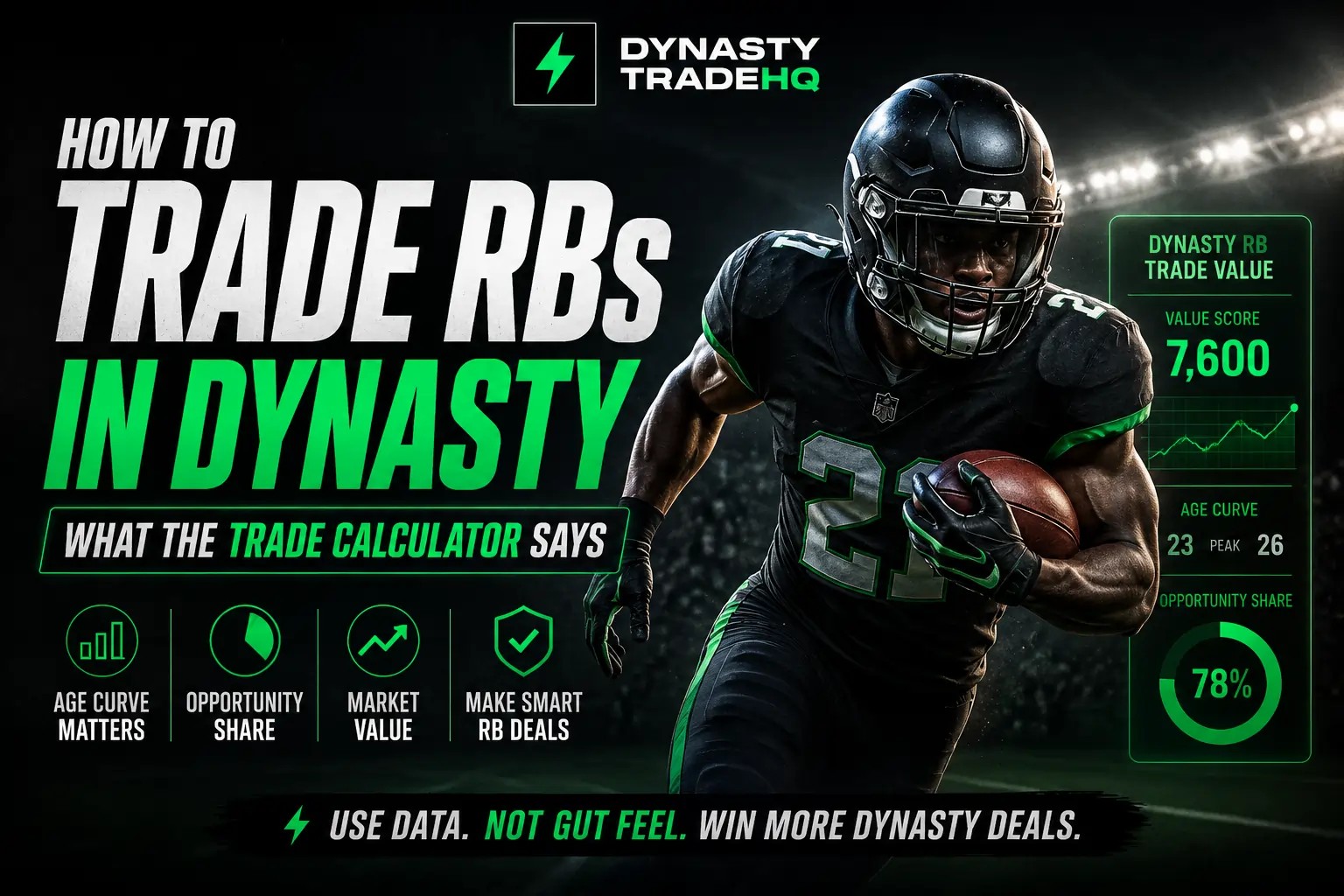
Dynasty RB trade value is not the same as redraft value. A trade calculator built for dynasty leagues applies age curves, opportunity share, and long-term role projections to every back on the board, not just what they produced last season. The core logic works like this: running backs peak between ages 23 and 26. Value starts declining around 27 and falls sharply by 29 regardless of recent production. A calculator that ignores age is essentially lying to you about what a back is worth beyond this season.
What separates a strong dynasty trade calculator from a static chart is the way it handles positional scarcity. RBs are the most replaceable skill position in the NFL. Offenses churn through backs, and the market reflects that. A 28-year-old RB1 coming off a 1,200-yard season will carry a much lower dynasty value than a 23-year-old RB2 with a clear path to a starting role. The calculator accounts for that gap automatically. Depth chart situation matters as much as age. A back locked into a two-man committee gets a usage penalty against a true workhorse.
Volume, not talent, is what drives RB value in both fantasy scoring and dynasty trade markets. Look at the player value page to see how opportunity share factors into each back’s current number. The single most common mistake managers make is comparing their RB’s redraft ranking to his dynasty value. They are different numbers measuring different things. Redraft values this season’s output. Dynasty values his remaining prime window.
The Age Cliff Is Real: When to Sell an RB
Selling a running back before the market catches on to his decline is one of the highest-leverage moves in dynasty. The calculator makes this easier because it shows you where a back sits on the age curve, not just where he sits in the standings. The sell window for most RBs opens at age 27. At that point, the market still pays close to peak price because name recognition and recent production prop up perceived value. But the dynasty calculator is already discounting forward value. That gap between market perception and actual projected worth is your opportunity.
Here is the practical rule: if a back is 27 or older and your team is not a legitimate title contender this season, the calculator almost always says sell. The return you get today will exceed the dynasty value he holds in two years. Selling is not the same as dumping. A back who is 27 with a workhorse role and a playoff-ready roster around him is still a legitimate trade chip for a contender. The key is knowing who to sell to: a team in a one or two year championship window will pay close to current market price for near-term production. A rebuilding team will not, and should not.
Managers often wait until a back visibly declines before selling. By then, the market has moved. The calculator will show a sharp drop in value that reflects what leaguemates already know. Selling at the signal, not after the fall, is what separates managers who build rosters from managers who react to them. Check the dynasty RB rankings to see exactly which backs are sitting in that sell window right now.
When to Buy an RB and What to Pay
The best time to buy a running back in dynasty is when his current value is suppressed by something temporary. An injury recovery, a slow start, a coaching change, or a committee role that is about to resolve in his favor. The calculator reflects current market sentiment, which means it also reflects fear and uncertainty. That creates buy-low windows. A buy-low target is a player whose value has dropped due to a circumstance, not a decline in skill or age. That distinction matters because a calculator treats a 24-year-old recovering from a knee injury very differently from a 29-year-old with fading production. The former is a discount on real future value. The latter is a trap.
When building a buy offer, the calculator tells you what the market currently values him at. Your job is to judge whether that number underestimates his actual upside. If a back is 23, has a clear path to a starting role, and his value is depressed because of one bad season, the gap between current market price and likely ceiling is your edge. For backs who are already established starters in their prime, buying at or slightly above calculator value is often correct if the fit solves a specific roster need. Do not wait for a discount that may never come. Young workhorses with clean depth charts rarely drop below fair value in active markets. If the calculator says the deal is roughly even and the back fills your biggest positional hole, make the trade.
RB-for-RB Trades: How to Structure Them
Running back for running back swaps are the most common dynasty trade format, and they are also the easiest to get wrong. Two backs with similar redraft rankings can carry wildly different dynasty values based on age, role, and team situation. The calculator approach is straightforward: plug both backs in, note the value gap, and let that number guide the conversation. A gap under five percent is essentially even and usually comes down to fit. A gap above fifteen percent means someone is winning clearly, and the losing side needs to recoup value with a pick or depth piece.
Where managers go wrong in RB-for-RB deals is treating redraft ranking as a proxy for dynasty value. A back who finished as an RB8 last season at age 30 is not worth more in dynasty than a back who finished RB22 at age 24. The calculator will tell you this explicitly. The market may not have caught up yet, which is exactly when to push the deal. Age-gap swaps are the most profitable trade structure for dynasty managers with a long rebuild window. Giving up a peak-value back in his late 20s for a younger back with a lower current rank but a longer runway is almost always a win over a three to five year horizon. The key structural rule: never do an RB-for-RB trade without running both backs through the calculator first. Perceived value and market value diverge constantly at this position.
Format Matters: How Scoring Settings Change Dynasty RB Value
Dynasty RB trade value is not a fixed number. It shifts based on your league’s scoring settings, and a calculator tuned to your format will give you significantly more accurate numbers than a generic chart. PPR scoring inflates the value of pass-catching backs relative to pure rushers. A back who catches 60 balls a year is worth considerably more in full PPR than in standard scoring, because his floor is higher in weeks where the run game stalls.
When you are buying or selling a receiving back, always check what format the calculator is set to before using the output. Superflex and two-quarterback formats shift money away from the RB position entirely. In those leagues, quarterback scarcity drives up the cost of the position to a point where RBs rarely return top-five picks in startup drafts. Dynasty RB trade value compresses in Superflex because the premium attached to the position is lower relative to QBs and elite wide receivers. TE premium settings work in the opposite direction.
When tight ends score extra points per reception, the TE position absorbs a disproportionate share of dynasty capital, and RBs trade at a slight discount to their value in standard TE formats. The bottom line for format adjustments: always set your league type before pulling a calculator value. A Superflex number applied to a one-quarterback deal is misleading in both directions.
Common RB Valuation Mistakes the Calculator Prevents
Most dynasty RB trade errors fall into a small number of repeatable patterns. Knowing what they are makes the calculator more useful because you can see when your instincts are pushing you toward one of them. Overpaying for name recognition is the most common error. A back with a household name and three years of elite production will often command more than his current calculator value because managers anchor to past performance. The calculator does not care about last year’s highlight reel. It prices forward value only.
Undervaluing role security is the second mistake. Two backs at the same age with the same raw value score are not equal if one has a locked-in three-down role and the other is splitting carries in a committee. Depth chart clarity is a valuation signal the calculator factors in through opportunity and usage data. A back with a clean role is worth more than the raw number suggests when that security is not reflected yet in the market.
Holding too long is the third pattern. A back whose value is declining month over month is costing you trade capital every week you wait. The calculator shows value trends over time. If a back has dropped two tiers in the last three months, the market is telling you something. Waiting for him to return to peak value is usually a mistake. For a current list of which backs have strong trade value right now and which are in decline, see the full breakdown at the best dynasty running backs guide.
Bottom Line: Should You Use the Calculator for Every RB Trade?
Yes. Every RB trade should start with the calculator before any other conversation. Dynasty RB trade value moves faster than any other position because the age curve is steep and situations change constantly. Running the numbers first stops you from making emotional decisions on trades that will hurt your roster for years. Set your format, plug in the players, check the gap, and negotiate from that baseline. If you have an RB trade sitting in your inbox right now, do not accept or counter before knowing the real value gap.
Run Your Trade Through the Calculator
FAQs
What is a fair dynasty trade value for a running back?
Fair dynasty RB trade value depends on the back’s age, role, and format. A starting back aged 23 to 25 with a workhorse role in a PPR league commands top-12 pick equivalent value. Backs aged 28 and older typically trade below a first-round pick even with strong recent production, because the calculator discounts remaining prime years heavily.
At what age does an RB lose dynasty trade value?
A: Running backs begin losing dynasty trade value meaningfully around age 27, and value drops sharply by age 29. Most calculators apply a steep aging curve to backs past 26 because historical data shows peak performance windows close quickly at the position. A back who is 27 or older should be evaluated as a sell in most non-contending roster situations.
Should I trade a running back for a wide receiver in dynasty?
Trading a running back for a wide receiver in dynasty often makes sense when the RB is 27 or older, and the receiver is under 26. Wide receivers hold value longer on the age curve, so you are effectively trading a depreciating asset for one with more runway. Use the trade calculator to confirm the value is close before agreeing to the swap.
How do I know if I am overpaying for an RB in a dynasty trade?
You are overpaying for a dynasty RB if the calculator shows a value gap of fifteen percent or more in the other manager’s favor after you factor in both players and any picks involved. The most common cause is anchoring to a back’s redraft ranking or last season’s finish instead of his current dynasty value, which accounts for age and forward projection.
